
 |
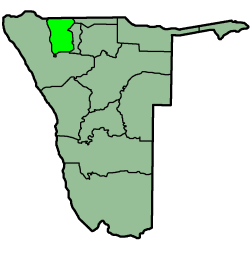
| The Omusati Region of Namibia, where the town of Okahao is located. |
So, I found out where in Namibia I will be living and who I will be teaching! Here are the details..
- School: The Shaanika Nashilongo Secondary School in the small town of Okahao. I'll be teaching basic English and basic computing skills to grades 8 and 9. The school teaches grades 8 through 12; about 650 students or "learners" and 25 teachers.
- Location: The small town of Okahao, in the Omusati Region, home to the Oshiwambo-speaking people. It is in Northwest Namibia, closer to the Angolan border. The town has a hospital, post office, bakery, church, petrol station, small shops and an open market. You can get some of your needs in town, and the capital of the north, Oshakati, is a relatively short taxi ride away for where you can just about anything else you desire.
- Accommodation: I'll be living alone in a house on school property, with the possibility of future volunteers moving in (such as VSO, Peace Corps, etc.) It has 3 bedrooms, bathroom, a kitchen, and a sitting room.
I just found a link to the Okahao Town Council's website, complete with a two page photo gallery to give everyone a better visual of where I will be and who I'll be around.
So Okahao, the town that I will be living in, is the birthplace of freedom fighter and first President of Namibia, Sam Nujoma. Here's a little African history from Wiki as it pertains to the former president:
So Okahao, the town that I will be living in, is the birthplace of freedom fighter and first President of Namibia, Sam Nujoma. Here's a little African history from Wiki as it pertains to the former president:
In 1960 he became the first President of the South-West Africa People's Organisation (SWAPO), having co-founded its forerunner, the Ovamboland People's Organization, in the late 1950s. At the time South Africa administered the land under a policy of apartheid, in which the best resources were reserved for those classified white, while other Namibians were treated as inferior and forbidden from active participation in their country. After years of asking the United Nations to ensure the occupying power South Africa released control of South West Africa, he authorized armed resistance in 1966. This began the Namibian War of Independence, which lasted 24 years.Yes, this is the Africa that the media never talks about... and this is a molecule of the rich African history that we were never exposed to in school...

No comments:
Post a Comment